

Mastering Aircraft Ditching Training for Emergencies: Emergency Water Landing Training Essentials

When an aircraft faces the rare but life-threatening scenario of a water landing—or **ditching**—preparation is paramount. Mastering emergency water landing training goes beyond memorizing procedures; it builds confidence, minimizes stress, and ensures every decision and action is effective when time is critical. In this article, we explore the essential elements of ditching training, highlight key challenges, and provide practical strategies to boost safety and preparedness.

### The Importance of Emergency Water Landing Training
Ditchings are uncommon yet extremely high-risk events. Large bodies of water introduce hazards vastly different from land-based emergencies—unpredictable surfaces, rapid flooding, and delayed rescue. Pilots and crew must be prepared to execute precise maneuvers, manage controlled descents, and lead efficient evacuations.
Comprehensive training equips aviation professionals to:
- Quickly assess the situation and determine the optimal course of action.
- Communicate clearly and calmly with passengers and crew.
- Perform controlled approaches and landings on water.
- Execute post-impact survival and evacuation protocols.
This training is highly practical, incorporating hands-on simulations, full-motion devices, and scenario-based drills that closely mirror real emergencies. The objective is simple: reduce panic and maximize survival rates.
### Key Components of Effective Ditching Training
Effective training integrates several interconnected elements to create a robust skill set.
**Knowing when to ditch** is foundational. Not every overwater emergency requires ditching, but the risk is always present on such flights and must be continually evaluated.
Each emergency type brings distinct challenges. By anticipating contingencies in advance, pilots can adopt a calm, logical, step-by-step mindset to process the flood of unfamiliar information in a crisis.
The most challenging scenarios are **time-critical emergencies**, like an uncontrollable in-flight fire, where the aircraft may stay airborne for only minutes. These force pilots to prioritize basic survival tasks with minimal preparation time, severely limiting options.
Conversely, when the aircraft can remain aloft longer, crews gain valuable opportunities to mitigate risks and improve survival prospects.
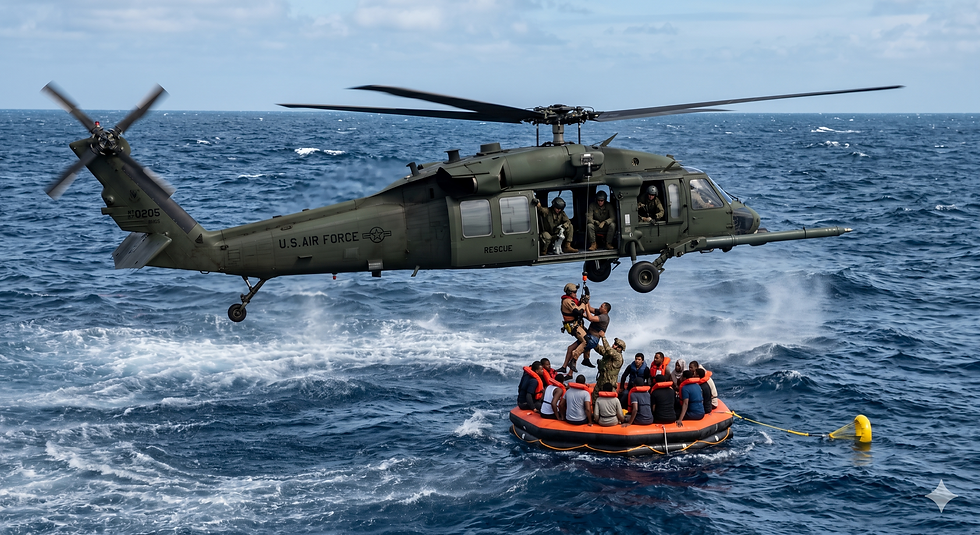
Assuming survival of the initial impact, the next priority is **minimizing time exposed in the water**. This demands pre-flight identification of the nearest land or vessel for rescue.
Incorporating maritime asset awareness into pre-departure planning is essential. Crews should thoroughly review and brief this information.
Tools like the **Ergo Blue** app (from Aeronautical Data Systems) provide real-time ship tracking via AIS data, displaying positions of over a million vessels worldwide along the flight route. It integrates with platforms like ForeFlight, allowing direct entry of latitude/longitude coordinates into aircraft navigation systems.
Without current ship data, a successful water landing is possible, but prolonged exposure becomes the dominant threat—leaving rescue dependent on luck or external help.
Real-time maritime data is a game-changer:
- If autopilot is functional, it acts as an "extra crew member," guiding the aircraft toward the nearest vessel and distributing workload.
- Precision improves dramatically, enabling accurate ditching near rescue assets **without visual contact**—even at night, in low visibility, or under low ceilings.
This capability enhances operational safety by:
1. Boosting pilots' situational awareness.
2. Reducing task saturation.
3. Shortening time to rescue.
4. Increasing overall ditching survivability.
### How Challenging Is Ditching?
Ditching ranks among the most demanding maneuvers in aviation. Water surfaces are dynamic and unforgiving—waves, swells, currents, and wind create variables absent in runway landings. Aircraft are engineered for land impacts, not water, raising risks of structural failure, injury, or inversion.

Pilots must simultaneously manage:
- **Speed**: Too high risks catastrophic breakup; too low invites stall.
- **Attitude**: Descent angle determines how the aircraft meets the water.
- **Environment**: Wind, wave patterns, and visibility dictate the approach.
The psychological burden is intense. Remaining composed under extreme pressure requires realistic, repetitive training to build automatic responses.
### Practical Tips to Enhance Ditching Preparedness
Drawing from industry experience and best practices, here are key recommendations:
1. **Conduct regular simulator drills** — Maintain muscle memory and sharpen decision-making. Include procedures for inputting ship locations to optimize displays and guidance.
2. **Practice crew coordination** — Ditching is a team operation. Drills clarify roles, improve communication, and build trust.
3. **Deliver effective passenger briefings** — Clear, confident instructions minimize confusion and speed evacuation.
4. **Ensure equipment proficiency** — All crew must be fluent in operating life rafts, vests, signaling gear, and exits.
5. **Study basic oceanography** — Knowledge of currents, wave behavior, and survival factors aids site selection and post-ditching strategy.
6. **Incorporate stress management** — Techniques like controlled breathing and focus drills help maintain composure.
Integrating these into recurrent training dramatically improves real-world outcomes.
### The Role of Technology in Modern Ditching Training
Technology has revolutionized training delivery. High-fidelity full-flight simulators replicate water dynamics, weather, and aircraft behavior with remarkable accuracy.
Emerging tools like **virtual reality (VR)** and **augmented reality (AR)** offer immersive, accessible practice—allowing procedural rehearsals, cockpit familiarization, and emergency scenarios on tablets or headsets, often remotely. These reduce simulator time, enable personalized feedback via data analytics, and support microlearning.
Digital checklists, decision aids, and performance tracking further refine skills, minimizing errors in high-stress situations.
### Why Prioritizing Ditching Training Matters
Aviation's core commitment is safety. Comprehensive ditching training saves lives, safeguards reputations, and reduces financial exposure.
Well-trained crews exhibit lower stress, faster evacuations, higher survival rates, and stronger regulatory compliance. Confidence born from thorough preparation translates to better crisis decisions.
For any organization serious about leadership in safety, investing in emergency water landing training is essential.
### Building a Culture of Safety
Ultimately, ditching mastery fosters an organization-wide safety culture. It demands buy-in from leadership to frontline teams—through continuous learning, advanced tools, and open dialogue on risks.
Safety is an ongoing process, not a destination. By embracing rigorous, technology-enhanced training, aviation ensures that when the unlikely occurs, crews respond with skill, composure, and maximum chance of success.
Mastering aircraft ditching training is a cornerstone of safer skies. With thorough preparation, cutting-edge knowledge, and the right mindset, these emergencies can be managed effectively—protecting lives and upholding trust in air travel.


Comments